
Blog
Rising Against Adversity: Overcoming Physical Impairments in Senior Fall Recovery
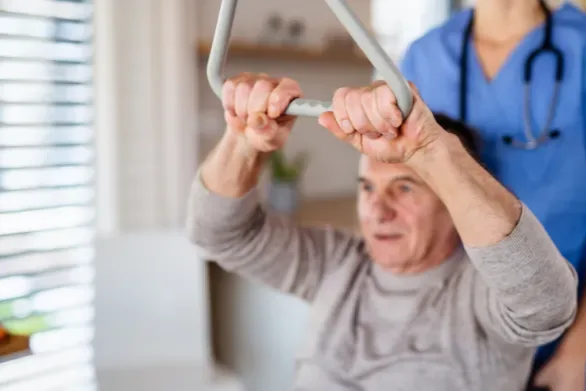
When seniors experience a fall, the physical challenges that follow can significantly impact their ability to recover independently. In this blog, we’ll delve into the first issue seniors face: physical impairments hindering self-recovery. From weakened muscles to joint stiffness, understanding these factors is crucial for designing effective interventions that empower seniors to rise against adversity.
1. Weakened Muscles:
Impact: Falls can lead to muscle strain, causing weakness that hampers the ability to stand up. Weakness in the lower body, particularly the legs, is a common consequence.
Intervention: Strength training exercises targeted at the major muscle groups, including the quadriceps and hamstrings, can help rebuild muscle strength. Physical therapists play a vital role in designing tailored programs to address specific weaknesses.
2. Joint Stiffness:
Impact: After a fall, joints may become stiff, making it challenging to perform the necessary movements for recovery. Stiffness is often more pronounced in weight-bearing joints like the knees and hips.
Intervention: Gentle joint mobilization exercises and stretches are essential to improve flexibility and reduce stiffness. Physical therapists employ techniques to enhance joint mobility and range of motion, facilitating a smoother recovery process.
3. Reduced Flexibility:
Impact: Limited flexibility, especially in the lower back and hip regions, can impede the range of motion required for getting up from the floor.
Intervention: Incorporating flexibility exercises, such as gentle stretches and range-of-motion activities, helps improve flexibility. These exercises are designed to address specific areas of reduced flexibility and enhance overall mobility.
4. Impaired Balance:
Impact: Fall-related injuries can disrupt the sense of balance, making it challenging for seniors to maintain stability while attempting to stand.
Intervention: Balance training exercises, including standing on one leg, heel-to-toe walking, and weight-shifting exercises, are beneficial. Physical therapists focus on improving balance through targeted interventions to enhance overall stability.
5. Cognitive Factors:
Impact: Cognitive impairments, including confusion or disorientation after a fall, can affect the ability to initiate the recovery process.
Intervention: Cognitive-behavioral strategies, coupled with exercises that promote cognitive function, contribute to a holistic approach. Physical therapists work on activities that engage cognitive processes while addressing physical impairments.
Overcoming physical impairments in senior fall recovery requires a multifaceted approach that addresses weakened muscles, joint stiffness, reduced flexibility, impaired balance, and cognitive factors. By tailoring interventions to individual needs, involving physical therapists, and promoting a comprehensive recovery plan, we can empower seniors to rise above the physical challenges and regain their independence. Stay tuned for more insights into fall recovery and holistic well-being
Keep Reading
Have a question about what you just read?
Talk it through with a Doctor of Physical Therapy, one-on-one, before you decide anything.
Book Your Visit
Ready when you are.
Request a time and a real person calls you back, usually within two business hours. No phone tree. No ‘someone will reach out.’ Just a plan.
- Hours Mon–Thu 8am–6pm, Fri 8am–4pm
- (817) 907-7993 Prefer to talk now? Call us.
- Same-week appointments available
5.0 · 100+ 5-star reviews
Typical response: under 2 business hours
Step 1 of 5
Request sent.
That’s the hard part done. We’ll call during business hours to lock in your time. Most people are on the schedule same week.
Visit Us
Care this good, this close.
Movement Theory Physical Therapy & Wellness
- 6350 Glenview Dr Ste 108, North Richland Hills, TX 76180 (opens in a new tab)
- (817) 907-7993
- Fax: (877) 887-2564
- DrJarred@TheMovementTheory.org
- Mon–Thu 8am–6pm, Fri 8am–4pm