
Weeks 1–2
Pain
Calm the pain down.
Early hands-on work manages post-surgical swelling and starts restoring motion as soon as you’re cleared.
What We Treat
The stiffness when you stand up from the couch. The twinge that decides whether today’s a good day. It’s fixable, and it starts with a cause-first evaluation, not a guess.
Request an Appointment
A real person calls you back, usually within two business hours.
Sound Familiar?
Two or more? Keep reading.
Why It Happens
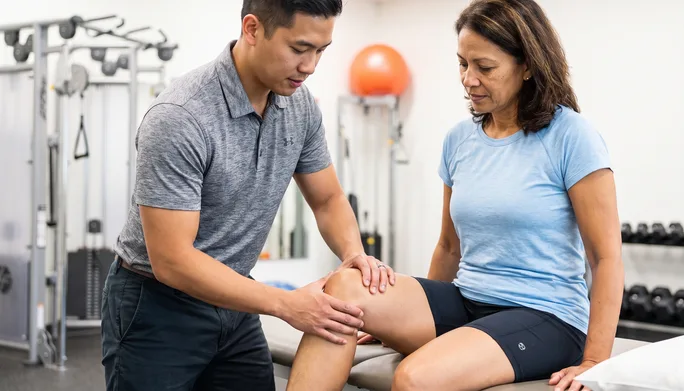
A knee replacement fixes the joint surface, but regaining full motion and strength afterward takes deliberate work. The muscles around the knee are often deconditioned from the pain that led to surgery, and scar tissue can limit motion if it isn’t addressed early.
Too little movement post-surgery can leave you stiffer than you need to be. Too much too soon has its own risks. A phase-based rehab plan, timed to your specific surgery and progress, finds the right pace.
The Honest Truth
Nobody regrets starting too early. Every week, someone in our clinic says they regret waiting.
How We Fix It
Every plan has an endpoint. Here’s what the four phases look like for knee replacement surgery.
Weeks 1–2
Pain
Early hands-on work manages post-surgical swelling and starts restoring motion as soon as you’re cleared.
Weeks 2–6
Prime
Targeted mobility work rebuilds full bend and extension, following your surgeon’s protocol.
Weeks 6–10
Perform
Progressive strengthening rebuilds the quad and leg capacity you need for real daily function.
Weeks 10+
Prevent
Walking, stairs, and your normal activities get tested before you’re fully cleared to return to them.
Questions, Answered
As soon as your surgeon clears you, often within the first couple weeks. We follow your surgeon’s specific protocol and build your rehab plan around it.
Most patients regain enough motion for normal daily activity, and we track your specific range of motion against expected milestones at every visit so you know exactly where you stand.
Most patients see steady, meaningful progress within the first 4 to 6 visits, with continued gains over 8 to 12 weeks.
Book Your Visit
Request a time and a real person calls you back, usually within two business hours. No phone tree. No ‘someone will reach out.’ Just a plan.
5.0 · 100+ 5-star reviews
Typical response: under 2 business hours
Step 1 of 5
That’s the hard part done. We’ll call during business hours to lock in your time. Most people are on the schedule same week.
Visit Us